
The Real Math Behind Furnishing Your Home: A Designer's Guide to Setting Your Interior Design Budget
How to create a furniture budget that works for your actual life, not someone else's formula.
Setting a home furnishing budget feels counterintuitive. Here you are, ready to create something beautiful, and the first step is math. But after years of shaping homes across the Southeast and nationwide, I've learned something important: the most successful spaces, the ones people genuinely love living in, start with honest numbers.
There's no magic formula that can dictate that you should spend X percent of your income on furniture. Those rules assume a uniformity of life that simply doesn't exist. Your budget should reflect how you actually live, not how design magazines suggest you should.
UNDERSTANDING YOUR REAL NUMBERS
Let's dispense the traditional wisdom first. Yes, many interior designers suggest allocating 7-10% of your home's value for mid-range furnishing, or 10-20% for a more elevated look. These percentages can serve as a helpful starting point, particularly if you're furnishing an entire home. But they're guidelines, not gospel.
The more useful approach? Start with three essential questions:
How do you actually live? Not the Instagram version of your life - the real one. If your dining table doubles as your office, that $200 chair is a false economy. If your living room hosts nightly fort-building until 8pm, perhaps the white linen sofa can wait.
What's your genuine timeline? There's a profound difference between needing functional furniture next week and thoughtfully collecting pieces over the course of the next year. Both approaches work, but they require entirely different budgeting strategies.
What number keeps you comfortable? Not your dream budget or your stretch budget, but the figure where, if costs creep up by 20% (and they often do), you're still financially secure.
THE QUALITY EQUATION: WHERE TO INVEST, WHERE TO SAVE
Here's what took me years to learn: not everything needs to be an investment piece. In fact, the most sophisticated rooms often mix high and low with such skill that the budget becomes invisible.
INVEST IN PIECES THAT WORK HARDEST:
The sofa you use daily ($1,500-$3,000 for quality that lasts)
Your mattress (one-third of your life happens here)
Dining chairs (if you actually dine at the table)
Primary lighting (it affects everything else in the room)
One statement piece that defines the space
SAVE STRATEGICALLY ON:
Side tables and consoles (excellent options exist at every price point)
Decorative objects (these evolve with your taste anyway)
Trend-driven pieces (that emerald velvet ottoman might not spark joy in two years)
Guest room furniture (unless you host constantly)
Anything purely decorative that doesn't see daily use
The secret lies in proportion. A well-made $2,000 sofa anchoring a room of thoughtfully chosen, affordable pieces creates a far better result than an entire room of mediocre furniture that won't survive the year.
ACCOUNTING FOR YOUR STATEMENT PIECE
We all have that piece. The vintage Murano chandelier. The reclaimed wood dining table. The gallery wall you've been planning for years.
Budget for it from the beginning.
This might seem counterintuitive when trying to be practical, but if your entire vision orbits around one special piece, trying to find "something similar for less" rarely ends well. You'll likely end up purchasing the original three months later, after already spending money on the compromise.
Instead, acknowledge that splurge upfront. Allocate the funds, then build the rest of your budget around it. Maybe the custom window treatments will wait. Perhaps you DIY the styling. But you get the piece that inspired the entire project.
BREAKING DOWN THE REAL COSTS
Let's translate vision into numbers. Start by listing every piece you need (not want, but need) to make your space functional:
Living Room Essentials:
Sofa: $1,500-$2,500
Coffee table: $400-$800
Two accent chairs: $400-$800 each
Area rug: $300-$600
Lighting: $200-$500
Side table: $150-$300
Total range: $3,350-$6,300
These numbers shift dramatically based on quality and source. That same living room could cost $2,000 at budget retailers or $25,000 at designer showrooms. Neither is “right,” they're simply different approaches to the same goal.
Once you've assigned realistic values to each piece, add them up. How does this total compare to your overall budget? If it's within range, excellent. If it's over, this is where strategy comes in, before any money is spent.
THE 20% RULE
Projects typically run 10-20% over budget. It's not poor planning, it's reality. Shipping costs more than expected. The perfect lamp appears. Sales tax adds up.
Build this buffer into your planning. If your budget is $10,000, plan your purchases around $8,000-$8,500. This cushion transforms from stress insurance to opportunity. When that perfect vintage mirror appears at the flea market, you can say yes without derailing everything.
YOUR STRATEGIC TIMELINE
Before diving into a phased purchasing plan, invest time in creating a comprehensive design vision that will guide your decisions over the coming months or years. Start by developing a mood board and cohesive color scheme that captures the overall aesthetic you want to achieve. This will serve as your north star when you're tempted by that sale item that doesn't quite fit your vision. Map out your space with a general floor plan, and use painter's tape on walls and floors to mark where major furniture pieces and artwork will eventually live to help you visualize proportions and avoid costly sizing mistakes.
Finally, create a detailed punch list of all furniture and decor items you'll need, organized by priority and room, which you can systematically check off as you make purchases. This upfront planning ensures that whether you're buying your sofa in month one or your accent chairs in year two, every piece will work together harmoniously to create a cohesive, intentional design rather than a disjointed collection of impulse buys.
Rather than overwhelming yourself with an entire home at once, consider this phased approach:
PHASE I: IMMEDIATE NEEDS
Somewhere to sleep comfortably
Somewhere to sit comfortably
Basic lighting
Essential storage
PHASE II: COMFORT ADDITIONS
Dining setup
Window treatments
Additional seating
Area rugs
PHASE III: PERSONALITY PIECES
Artwork
Decorative lighting
Accent furniture
Styling objects
This approach prevents both decision fatigue and budget strain while allowing your space to evolve naturally.
THE BOTTOM LINE
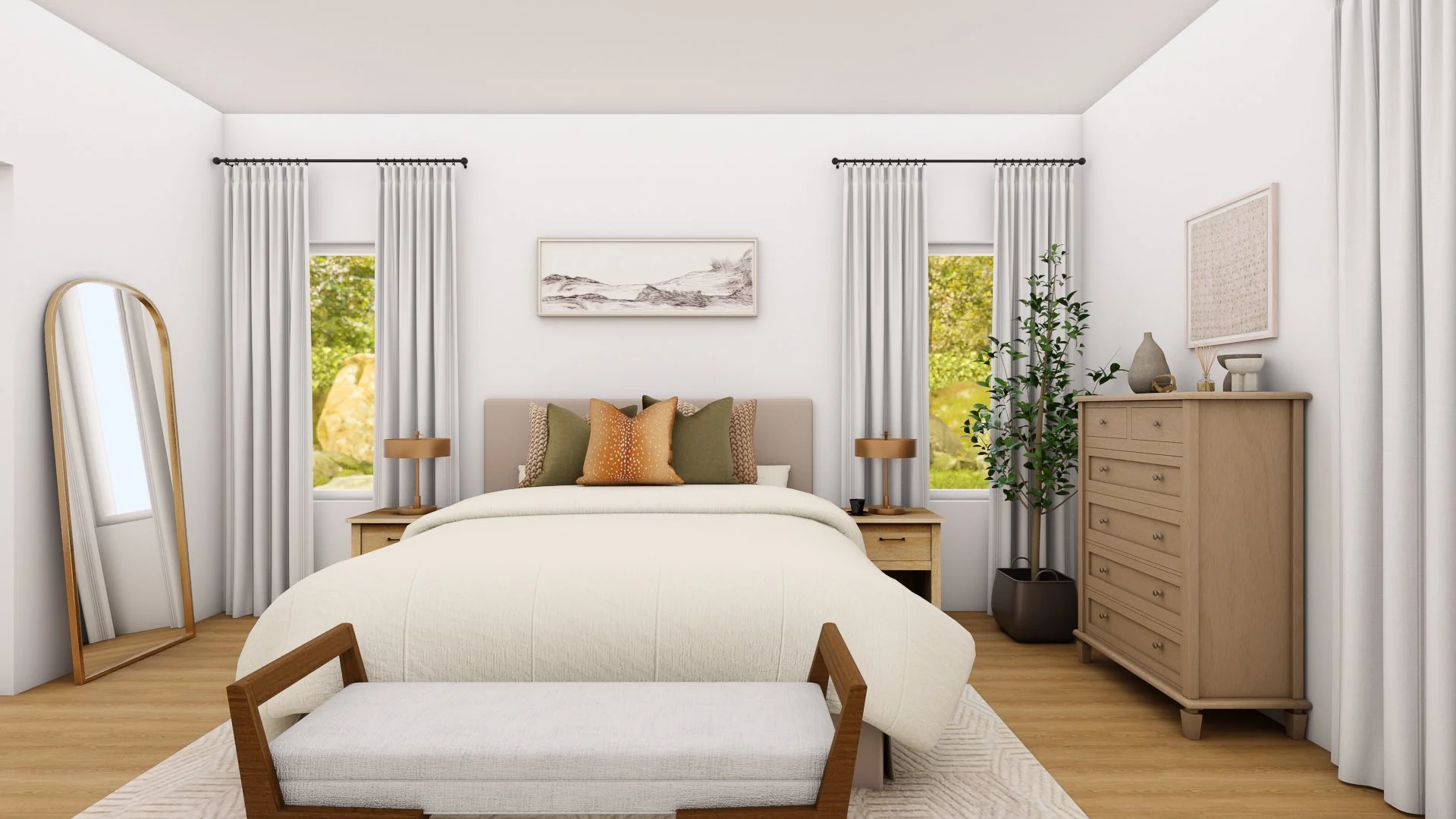
Your furniture budget is deeply personal mathematics. It's the intersection of what you value, how you live, and what brings you genuine joy, not what any formula suggests you should spend.
The goal isn't perfection or 100% completion. It's creating a home you love living in, without the financial stress that ruins the entire experience. Sometimes, the best design decision is letting an empty corner wait for the right piece, rather than purchasing the wrong piece to fill the space immediately.
Start with what you need. Add what you love when you can afford it. Let the rest unfold as your budget and life allow.
That's not settling - that's living beautifully within your means.
Ready to create your personalized furnishing budget? Download our Room Budget Calculator to build your own roadmap to a beautifully furnished home.
